
Navigating Loss in the Workplace
I’ve been curious lately about why we don’t talk about the impact of losing a loved one while we are in the workplace.
I’m not talking about disclosing intimate experiences or sharing your personal feelings about the loss of a loved one in everyday circumstances. I am simply talking about creating space and compassion for a colleague who’s gone through the loss of a parent, partner, pregnancy, or pet.
My brother died a few months ago.
Suddenly.
Tragically.
You could say it was gut-wrenching.
If you want to listen to the 7-minute eulogy I gave for him, please do. It helps to know that I am honoring his life. You can listen HERE.
The way the circumstances played out, I had to show up and my grief process has slow and somewhat delayed.
I’ve been waiting for the pause.
In the weeks after his death, I was showing up for my family. Showing up is a big part of my personal brand (if I’m late for anything, you should probably check the hospital).
It’s funny that as a culture we don’t make the process of death easy.
Try Googling
“What to do when a family member dies while they are traveling?”
or
“What questions should I ask a medical examiner?”
or
“What authorities should be notified when someone dies?”
I’ll save you the effort.
99% of search returns serve up contact information for lawyers.
I’ve spent the first few weeks waiting for the pause.
To catch my breath.
Then the grief came in waves.
Grief will show up when you least expect it.
And it will take you for a ride.
Grief requires your attention.
You can try to avoid it, but it’s nearly impossible.
Trying to resist grief is like trying to hold a beach ball underwater.
It’s going to come up and smack you in the face.
We grieve because we love.
Grief is a force of energy that can’t be controlled or predicted.
It comes and goes on its schedule.
Grief does not obey your plans or your wishes.
Grief will do whatever it wants to you.
In that regard, Grief has a lot to do with love.
We grieve because we love.
Whether it’s a job, a loved one, a diminished hope, the loss of an opportunity, or the state of the world, there’s no suffering Olympics.
We are not going to stack-rank losses.
No one’s challenges or suffering is more pure or legit than another.
We need compassionate release.
And compassionate leave from work.
We need clear policies that are defined in an employee handbook. Implement clear bereavement and compassionate leave policies, differentiating between immediate needs and those over time.
For leadership, bosses, colleagues, and HR professionals here are some additional suggestions:
Avoid assuming everyone needs time off; some may prefer to work. Respect individual coping styles, some may choose to continue working to process grief actively.
Practice "holding space" by being fully present, creating a safe environment, and fostering empathetic listening.
Practice empathy and the ability to recognize others' perspectives and emotions without judgment.
Communicate that you are a safe harbor, offering support and periodic check-ins.
Refrain from comparing your experience; instead, express willingness to help with tasks or simply be there.
Acknowledge the unpredictable nature of grief; someone may go from laughter to tears in seconds.
Avoid measuring progress; focus on expressing happiness that they are present.
Don't ignore discomfort; ask what they need at the moment, acknowledging that you are a safe harbor
Give grace with the need for space and time off. Most people I've spoken to need the days sprinkled out over time.
To meet with medical examiners. Funeral Directors. To manage estates and wills. To go to court. Call banks. To cry in bed. To process trauma.
To grieve in whatever way you need.
It got me thinking about my professional community and many of my clients who are experiencing the loss of a job or an opportunity.
Don’t listen to voices that tell you to lighten up, it’s just a job. Or fill you with some BS cliche.
Find the pause in the nooks and crannies of your day and allow yourself to process the information. You get to process it all however you need to.
Find the helpers. The ones that will hold space for you. A friend, mentor, therapist, or a coach.
Processing what you are feeling with another person may help you. You also may choose to do it quietly in your own time and space. Choose you.
Don’t let anyone dismiss you or tell you to get over it. Take the time you need in whatever form you need.
And as I sit here writing this, I just found out that my grandmother, who was a month shy of her 101st birthday has passed away.
This death is completely different.
3 children. 13 grandchildren. 13 great-grandchildren.
A beautiful life well lived (if you want to know more about her you can listen to the podcast I did to commemorate her 100th birthday HERE)
WTF, right? Some days, the universe is like a bad high school boyfriend. It’s a mix of sweetness, anticipation, connection, inspiration, and confusion all at once.
Then I had to giggle because I could hear my grandmother hollering at my brother for getting ’there’ first.
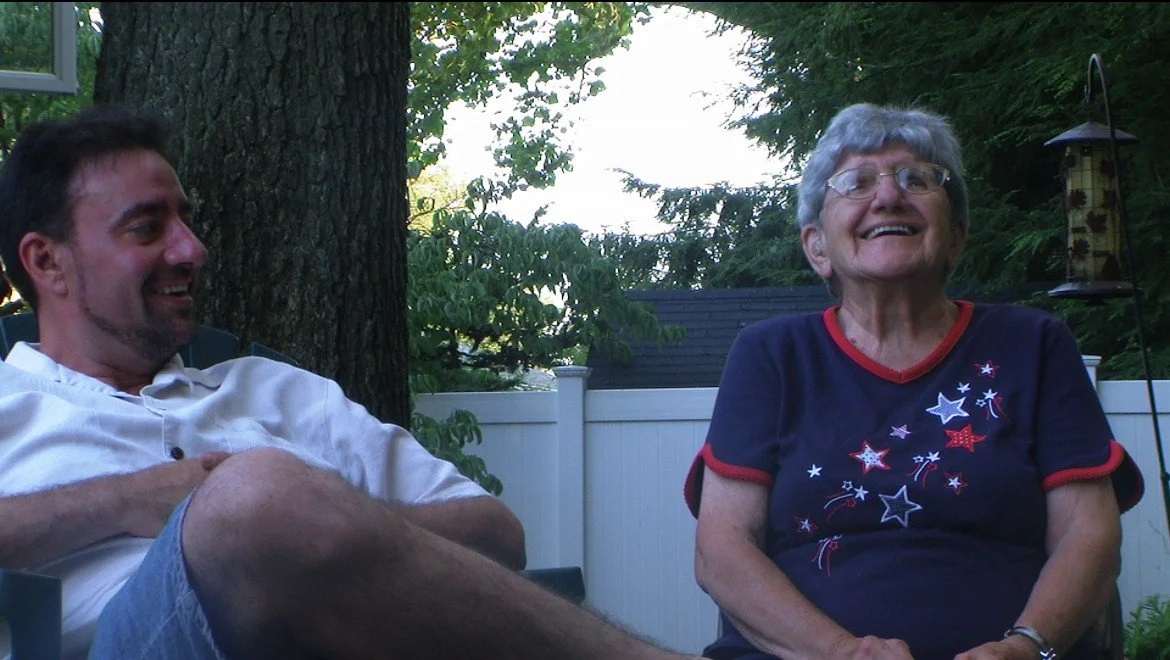
A favorite picture of my Brother and Grandmother sharing a giggle. Circa 2009.
Most of us have to work for money, benefits, and intellectual stimulation. We need full use of our facilities to perform.
Performing under life’s circumstances sometimes can be incredibly challenging.
I know I am called here to be a guide, a navigator.
All these experiences have made me a fantastic coach.
This work is a ministry for me.
In the coming months, I will be writing more about work and loss in whatever format it takes.
I’d love to hear from you if you’d like to share your experiences on how you got through a loss. So many of you have come forward already and I thank you.
We need to help each other.
And if you are looking for support, I’d love to be your coach. You can schedule a call HERE.